
Not insight — contact
Most therapy asks: why am I like this? Gestalt asks something different: what is happening right now? Not as a deflection from history, but as a recognition that the past doesn't live in the past — it lives in how we breathe, how we hold tension, how we make or avoid contact with others. The past is always present, and it can be worked with directly in the room.
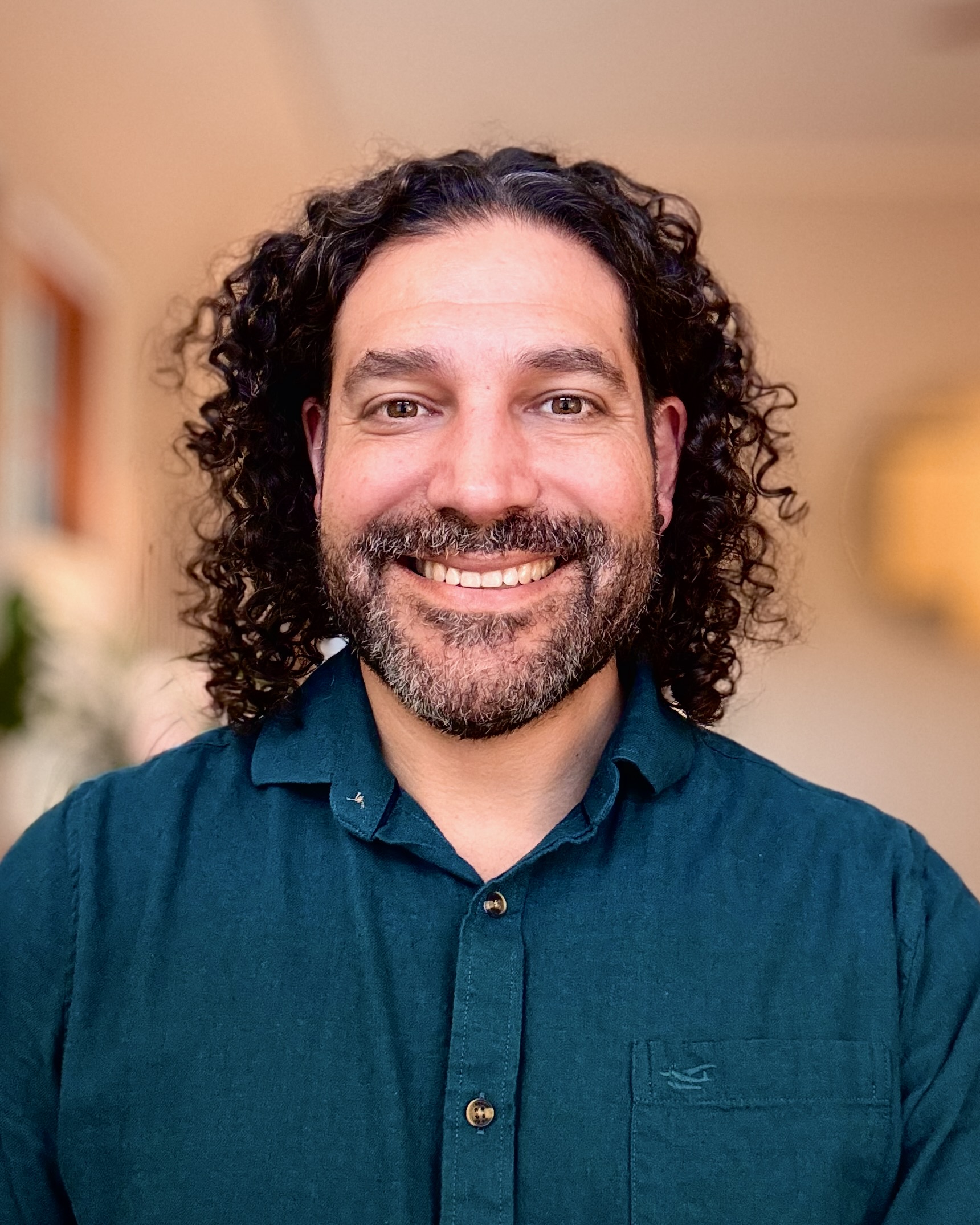
Gestalt therapy was developed by Fritz Perls in the mid-twentieth century, drawing on phenomenology, existentialism, and field theory. The approach Sebastian practices is rooted in Claudio Naranjo's Gestalt Viva tradition — a deepening of classical Gestalt that integrates the Enneagram of personality, Eastern contemplative practice, and a genuine invitation toward what Naranjo called the Dionysian: aliveness, spontaneity, and the capacity to be fully present without the mediation of character.
The Enneagram as a map
The Enneagram describes nine core character structures — each organized around a different early wound, a different strategy for navigating a world that felt unsafe or insufficient. In Naranjo's hands, it is not a personality typology but a map of suffering: showing us the specific way we have contracted around a core hurt and built an identity on top of it.
Understanding your type isn't the goal — it's the doorway. What lies behind the character structure, when it begins to soften, is what Gestalt is oriented toward: a more direct, less defended way of being in the world, in relationship, and in your own body.
"The goal of Gestalt is not to feel better. It's to become more real."
What this looks like in session
Gestalt sessions are active. Rather than reconstructing the past through narrative, we explore what is alive in the present moment — a tension in the shoulders, a sentence left unfinished, a feeling that wants to move but doesn't. The therapist might invite an experiment: speak directly to the empty chair, finish that sentence, notice what happens in your body when you say that.
This is not performance or catharsis for its own sake. The experiments arise organically from what is present and are always in service of awareness — of seeing more clearly how you move through your life, what you avoid, what you reach toward, and what becomes possible when character loosens its grip.
Core Principles
Awareness
The quality of attention we bring to what is actually happening — not what we think, fear, or remember, but what is alive right now.
Contact
The capacity to meet what is present — in ourselves, in others, in the moment — with full presence rather than deflection or performance.
Experiment
Trying something new in the room — a gesture, a sentence, a stance — to discover what the body and psyche already know.
The Here and Now
The past lives in the present. Rather than analyzing history, Gestalt works with how it shows up in this moment, in this conversation.
Enneagram
A map of nine character structures — not as a label, but as a mirror: showing us the habits of heart and mind we've built around a core wound.
Aliveness
The Dionysian thread in Naranjo's tradition — an invitation toward spontaneity, authentic expression, and the felt sense of being fully alive.
Your Therapist
In These Services
Curious about Gestalt?
Start with a free 20-minute consultation — we'll talk through what you're working with and whether this approach might be a good fit.
Book a Free Consultation